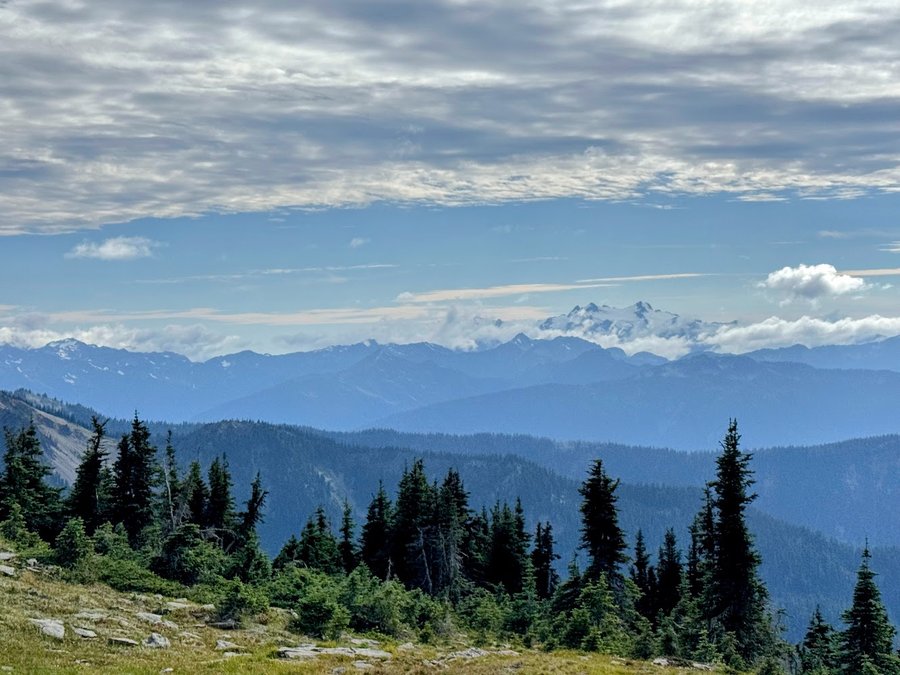
Jen went backpacking Lake Lillian July 29 to August 1, 2026 18 miles 5,650 feet gained 3 nights
I saw a call out for volunteers to monitor marmots in Olympic National Park and was able to convince my pals to join the fun.
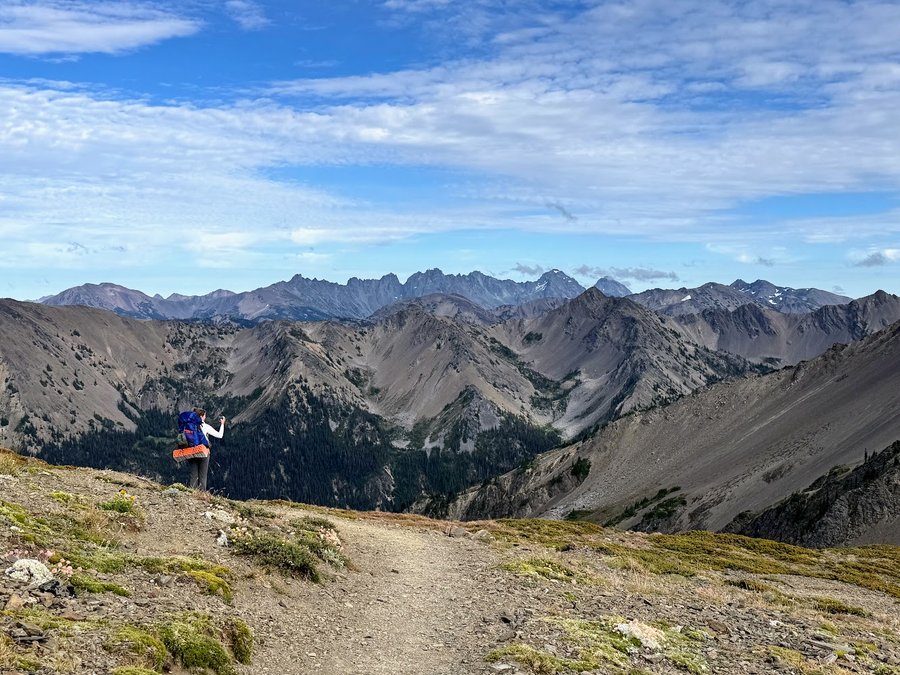
After a half day of classroom training in Port Angeles, and a few hours in the field on Hurricane Hill, we set off for our study area. We left the Obstruction Point trailhead at 5:30 pm and hiked south on the ridge, then dropped into Grand Valley and camped the first night at Moose Lake.
The Olympic Marmot is endemic to the peninsula, and the population has been declining. Park biologists are trying to understand the habitation patterns and figure out what is contributing to the shrinking population. Many former colonies have been abandoned.
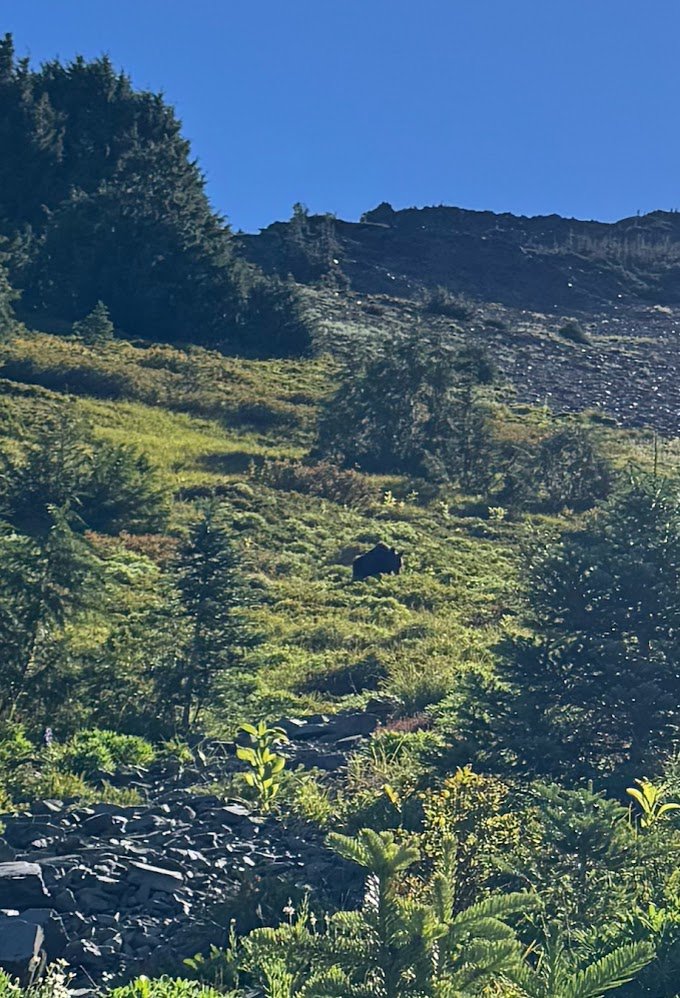
In the morning, we headed over to our site, by climbing up to Low Pass, then dropping down on the west side into the Lillian Basin- a beautiful alpine backcountry area with no designated trails or campsites. You need a XC permit to stay here. We had an exciting bear encounter. Just as we emerged from a wooded area onto a steep scree slope, Melanie shouted "Hey Bear". We looked up and a bear was coming barreling down the hill heading straight towards us. We were standing in an obvious gulley that was its path, so we moved aside. It didn't notice us until Melanie screamed a second time- louder. It immediately veered off, and then after heading down a bit more, returned to the descent gully. It never had any interest in us. We watched it head over to a small pond below and wallow in the water for a bit, then it moved on.
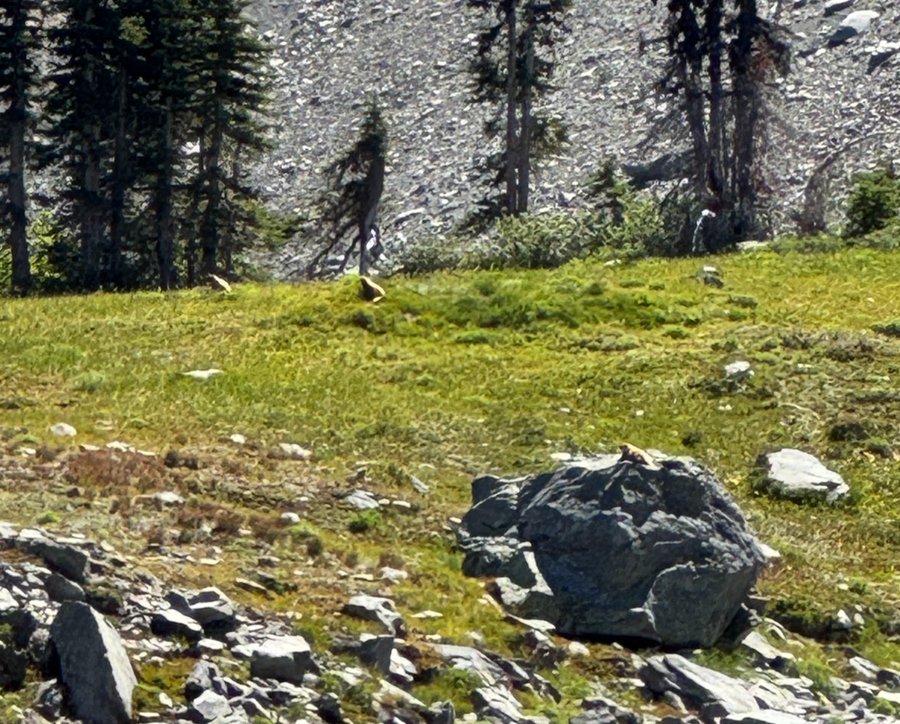
We set up camp near our first two study plots, then went to explore them. We collected and documented marmot evidence, but in the heat of the day we didn't see any. Later on we heard their whistles from camp.
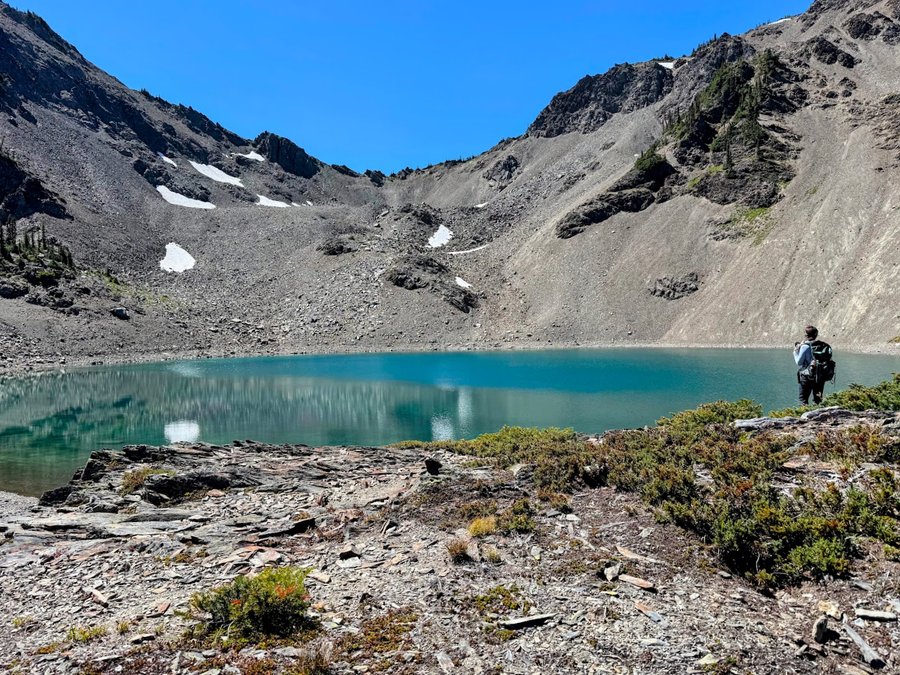
The next day, we headed over to Lillian Lake, where we had multiple plots to document. It's so beautiful there. We saw plenty of burrows, heard whistles, collected scat, and saw some actual marmots. That evening, we watched (through binoculars) a bear on the hillside of one of our study plots. The bear was excavating burrows and we think it ate a few animals. It could have been either boomers (mountain beavers) or marmots, as we had observed evidence of both at that site. This was pretty disturbing to us, but that's nature I guess.